Weather vs Your Roof: Impact of Weather on Your Roof
Your home’s roof is its primary shield against the weather, but this constant exposure takes a toll. Understanding how sun, wind, hail, and snow impact your specific roof type is the key to preventing major damage and costly repairs.
This guide breaks down the weather’s effect on the four most common residential roofs—asphalt shingle, metal, flat, and wood shake—and provides a clear playbook to protect your roof from weather.
Part I: How Weather Damages Your Roof
Asphalt Shingle Roofs
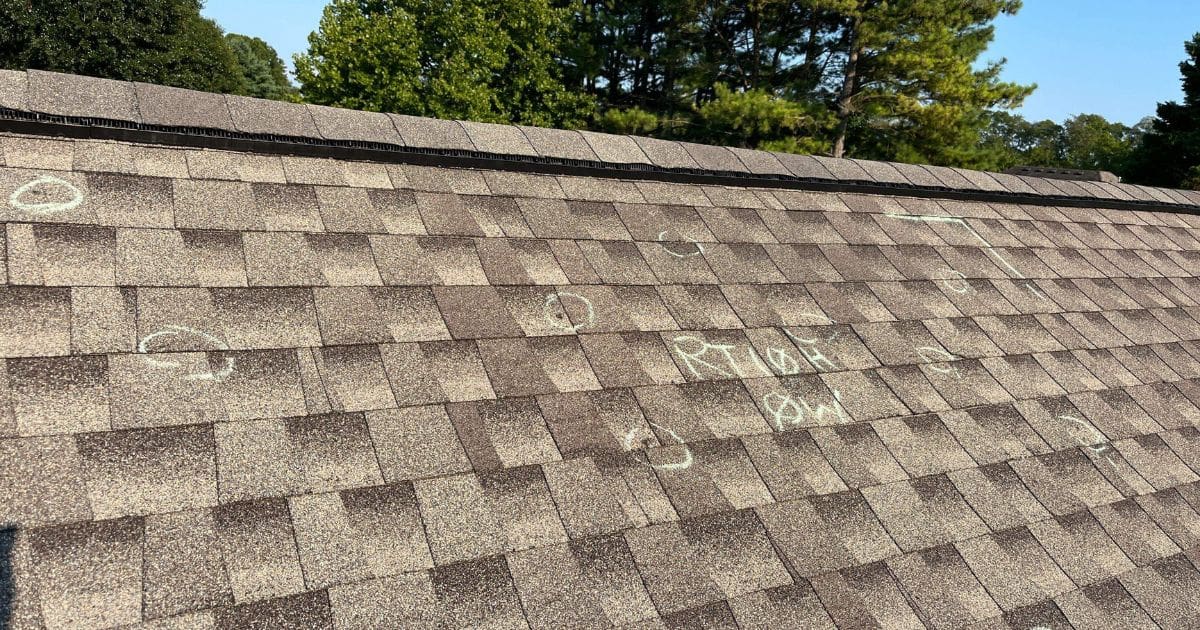
As the most common roof type, asphalt shingles are susceptible to a cascading series of weather-related failures, where damage from one element makes the roof vulnerable to the next.
- Sun, Heat, and UV Radiation: This is the most persistent threat. UV rays chemically break down the asphalt, making it brittle. This causes the protective surface granules to fall off, exposing the shingle to more UV radiation and accelerating its aging. Daily temperature swings (thermal cycling) also cause expansion and contraction, leading to cracks. Sun damage is the “gateway damage” that sets the stage for wind and hail failure.
- Wind: High winds create uplift that can break the shingle’s sealant strip. Once the seal is broken, the shingle flaps, creating a permanent crease that eventually fractures the shingle, leading to tear-offs.
- Hail: Hailstones create bruises by forcing granules into the asphalt mat, creating a soft spot that will fail prematurely. Larger impacts can fracture the shingle’s internal mat, creating a direct path for leaks that may not be visible from the surface. Check for dents on roof vents and gutters to gauge hail severity.
- Snow and Ice: Heavy, wet snow can exceed a roof’s structural load. The greater threat is ice dams, which form at the roof’s edge when heat escaping from a poorly insulated attic melts snow. This trapped water backs up under the shingles, causing leaks, rot, and interior damage.
Metal Roofs
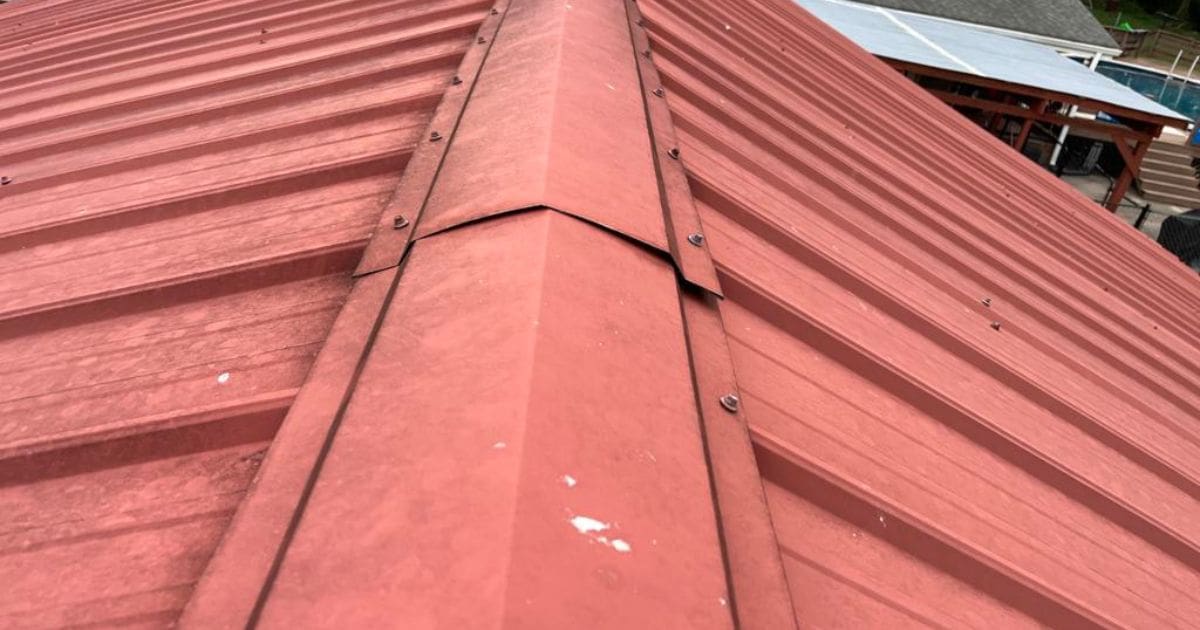
Metal roofs are known for durability, but they have unique vulnerabilities related to temperature changes and their rigid surfaces.
- Heat and Sun: Metal panels expand and contract significantly with temperature changes. This can cause a cosmetic waviness called “oil canning.” More importantly, UV radiation degrades the paint finish, leading to fading and chalking (a powdery residue), which reduces the coating’s ability to protect the metal from corrosion.
- Wind: While highly wind-resistant, metal roofs can fail at their attachment points. Uplift forces can cause fasteners to back out over time, compromising the watertight seal, especially on exposed fastener systems.
- Hail: Most hail causes only cosmetic denting. Functional damage occurs only when a very large hailstone chips or perforates the protective coating, exposing the base metal and creating a spot where rust can form.
- Snow: The smooth surface of a metal roof sheds snow effectively, but often all at once in a dangerous “roof avalanche.” To prevent this hazard, snow guards are essential for holding snow in place so it can melt gradually.
Flat Roofs
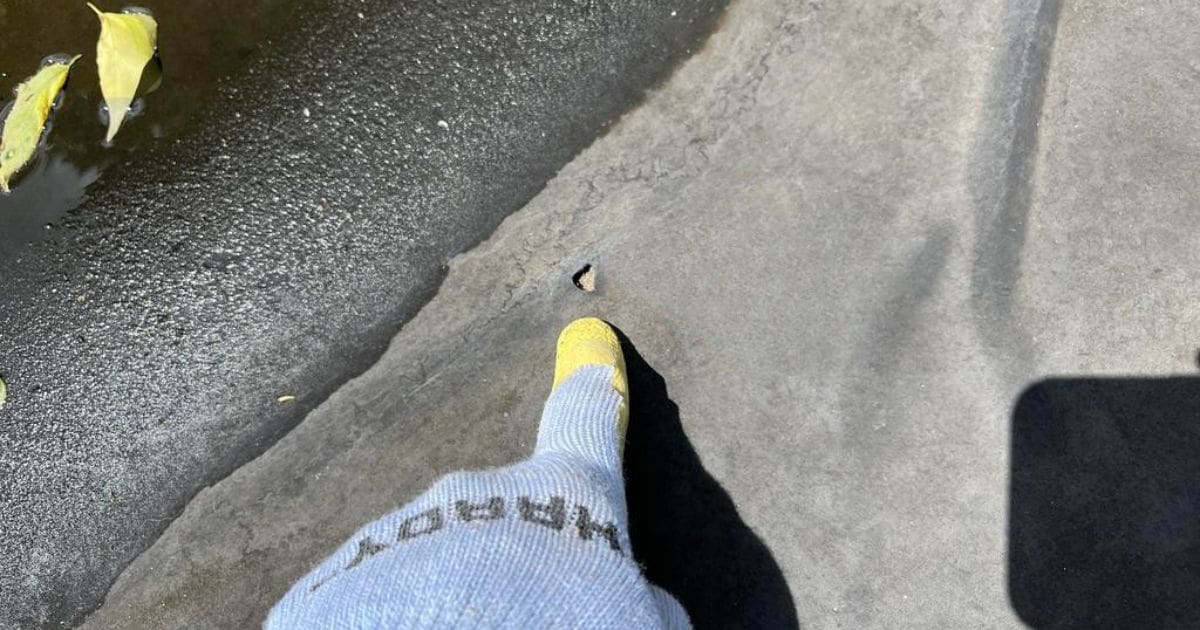
Low-slope roofs don’t shed water easily, making them highly dependent on the integrity of their membrane and drainage systems. Their greatest enemy is standing water.
- Sun: Intense, direct sun exposure degrades the roof membrane, making it brittle. This leads to blistering (trapped moisture expanding in the heat) and “alligatoring“ (deep cracks resembling alligator hide), both signs of advanced aging.
- Wind: Wind creates a powerful vacuum effect over flat roofs, causing uplift that is strongest at the corners and edges. This can peel the membrane back, leading to catastrophic failure.
- Hail and Debris: With no angle to deflect impacts, flat roofs are highly vulnerable to punctures from hail or wind-blown debris. A single puncture creates an immediate leak path.
- Ponding Water: Standing water that remains for more than 48 hours is the ultimate threat. Caused by clogged drains or improper slope, ponding water accelerates membrane degradation, weighs down the structure, and eventually finds a way to leak through seams. In winter, this water freezes and expands, forcing seams apart.
Wood Shake Roofs

As an organic material, a wood shake roof’s longevity depends entirely on its ability to manage moisture.
- Sun and Moisture: The cycle of absorbing rain and drying in the sun causes wood shakes to swell and shrink. This constant movement leads to splitting, cracking, and curling. UV rays break down wood fibers, giving shakes their weathered gray look but also weakening them.
- Wind and Hail: Aged, brittle shakes are easily damaged. Wind can lift curled shakes and snap them off, while hail can shatter or split them on impact, causing an immediate failure.
- Moisture and Rot: The primary enemy is lingering moisture. Debris (leaves, pine needles) or heavy shade traps moisture against the wood, creating a breeding ground for moss, mold, and rot, which actively consume the wood and destroy its integrity. A wood roof must be able to dry out quickly to survive.
Part II: Your Proactive Defense Plan
Proactive maintenance is always cheaper than emergency repairs. Use this guide to fortify your roof against the weather.
Foundational Strategies for All Roofs
- Inspect Regularly: Visually inspect your roof from the ground every spring and fall and after major storms. Get a professional inspection every 1-2 years.
- Keep It Clean: Clear all debris from the roof surface and ensure gutters and downspouts are clean and free-flowing.
- Trim Trees: Cut back any branches that overhang or touch the roof to prevent abrasion, debris buildup, and impact damage.
- Check Attic Ventilation & Insulation: A properly balanced attic protects your roof from summer heat buildup and winter ice dams.
Weather-Specific Defenses by Roof Type
Roof Type | Sun/Heat | Wind | Hail | Snow/Ice |
Asphalt Shingles | Primary Risk: UV degradation causes granule loss & embrittlement. Action: Choose UV-resistant shingles & ensure proper attic ventilation. | Primary Risk: Sealant failure leads to shingle lifting, creasing, and tear-off. Action: Select shingles with a high wind rating (Class F/H) & ensure proper nailing. | Primary Risk: Impacts cause bruising and mat fracture. Action: Install Class 4 impact-resistant (IR) shingles. | Primary Risk: Ice dams cause water backup under shingles. Action: Air seal and insulate the attic; install an ice & water barrier at eaves. |
Metal Roofs | Primary Risk: UV rays cause paint to fade and chalk. Action: Select a high-quality PVDF (Kynar) paint finish. | Primary Risk: Uplift forces can cause fastener back-out. Action: Use a concealed fastener system & follow the specified fastening pattern. | Primary Risk: Impacts cause cosmetic denting; severe impacts can lead to rust. Action: Choose a thicker gauge metal (24-ga) and repair any coating damage promptly. | Primary Risk: Snow can slide off in dangerous avalanches. Action: Install an engineered snow guard system. |
Flat Roofs | Primary Risk: UV rays degrade the membrane, causing brittleness and cracking. Action: Apply a reflective “cool roof” coating (acrylic or silicone). | Primary Risk: Negative pressure creates uplift, especially at edges. Action: Ensure robust, secure attachment of perimeter edge flashing. | Primary Risk: Direct impacts can easily puncture the membrane. Action: Conduct prompt post-storm inspections and repair all punctures immediately. | Primary Risk: Clogged drains lead to destructive ponding water. Action: Perform regular cleaning of all drains, scuppers, and gutters. |
Wood Shakes | Primary Risk: Sun and moisture cycles cause shakes to dry, crack, and split. Action: Apply UV-inhibiting and preservative treatments every 3-5 years. | Primary Risk: Wind can lift and break brittle, curled shakes. Action: Replace damaged shakes promptly. | Primary Risk: Impacts can shatter and split shakes. Action: Choose Class 4 impact-rated shakes. | Primary Risk: Trapped moisture leads to rot and fungal decay. Action: Keep the roof clean of all debris and trim overhanging trees. |
Ready to Protect Your Roof From Weather
Weather damage is rarely a single event but a process of cascading failures. Slow, silent damage from the sun weakens a roof, setting the stage for acute failure from wind or hail. A minor issue like a clogged gutter can trigger the complete destruction of a flat roof.
Understanding these specific vulnerabilities empowers you to shift from reactive repairs to proactive maintenance. Regular, informed inspections and targeted upkeep are the most effective investments you can make to protect your home’s most vital asset and ensure long-term peace of mind.